



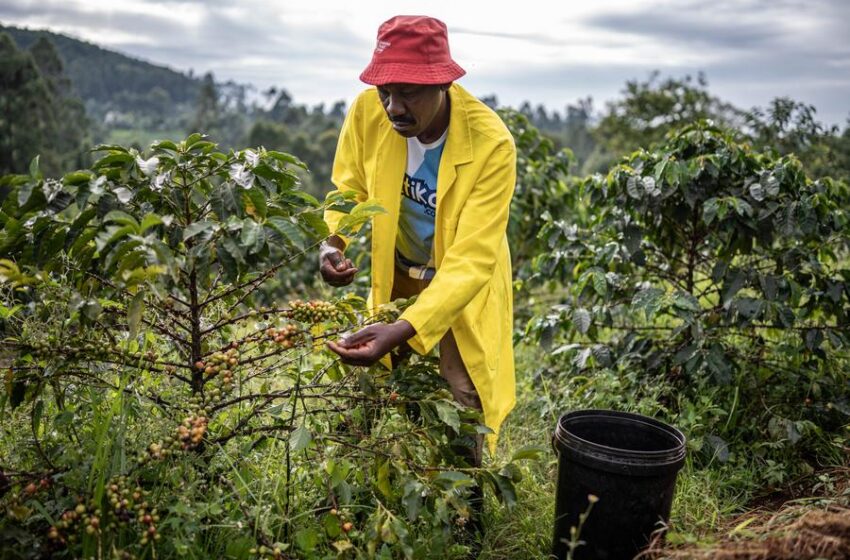
Ethiopia has achieved a historic milestone in its coffee industry, earning a record $3 billion (Sh388 billion) from coffee exports during the current fiscal year, underscoring the country’s growing influence in the global coffee market. The achievement marks the highest export revenue ever generated by Ethiopia’s flagship agricultural commodity, reflecting stronger international demand and sustained reforms across the sector.
The record earnings reinforce coffee’s position as Ethiopia’s largest agricultural export and one of the country’s most critical sources of foreign exchange. The industry contributes roughly one-third of Ethiopia’s total export revenue while supporting millions of people engaged in farming, processing, transportation and other activities along the coffee value chain.
Authorities attribute the milestone to improved production, enhanced quality standards and wider access to international markets. Over the past several years, Ethiopia has invested heavily in modernising coffee farming practices, strengthening quality assurance systems and expanding market opportunities for its premium beans.
The latest performance also highlights the country’s growing reputation as a supplier of high-quality specialty coffee, with buyers increasingly seeking sustainably produced beans from traditional coffee-growing regions. Industry stakeholders say improvements in traceability and processing have enabled Ethiopian coffee to command stronger prices in international markets.
Government officials say the achievement reflects coordinated efforts by farmers, exporters, cooperatives and policymakers working together to strengthen one of the country’s most valuable industries.
“It is accomplished. Ethiopia has successfully achieved its target of generating three billion dollars from coffee exports this budget year. Congratulations to everyone who contributed to this historic achievement,” Agriculture Minister Addisu Arega said in a statement announcing the record performance.
Strong Growth Driven by Reforms
The latest figures cap four consecutive years of impressive export growth for Ethiopia’s coffee industry. Export earnings rose from $1.4 billion (Sh181.1 billion) in 2023 to $1.43 billion (Sh185 billion) in 2024 before climbing sharply to $2.65 billion (Sh342.7 billion) in 2025. This year’s record $3 billion (Sh388 billion) represents another significant leap, reflecting sustained momentum in both production and global demand.
Officials say the upward trend has been supported by reforms aimed at improving competitiveness throughout the coffee value chain. Investments in agro-processing facilities have enabled exporters to deliver higher-value products, while strengthened quality assurance systems have enhanced Ethiopia’s reputation among premium buyers.
Expanded traceability programmes have also become increasingly important as international consumers place greater emphasis on sustainability and product origin. Exporters have adopted improved certification systems that allow buyers to track coffee from farm to market, helping Ethiopian producers secure access to lucrative specialty coffee markets.
Environmental conservation has formed another pillar of the government’s coffee development strategy. Large-scale tree-planting initiatives combining indigenous tree species with coffee seedlings have been introduced to restore degraded landscapes while improving the resilience of coffee-growing regions against climate-related challenges.
Agricultural experts say such programmes not only protect biodiversity but also create favourable growing conditions for coffee, which thrives under natural forest canopies. The approach is expected to strengthen long-term production while helping farmers adapt to changing weather patterns.
“The combination of better farming practices, investment in processing and stronger sustainability standards has significantly improved Ethiopia’s competitiveness in global coffee markets,” an industry analyst said.
Expanding Global Market Reach
Ethiopia continues to consolidate its position in the global specialty coffee trade, where demand for premium-quality beans remains robust despite economic uncertainty in some regions. The country’s distinctive coffee varieties, known for their unique flavours and aromas, continue to attract buyers willing to pay premium prices.
Germany remains among Ethiopia’s leading coffee destinations alongside Saudi Arabia, the United States, Belgium, China, Japan and South Korea. These markets have sustained strong demand for Ethiopian coffee, particularly specialty varieties sourced from renowned growing regions.
Trade diversification has also opened new opportunities in emerging markets. Ethiopia has recorded significant growth in exports to Russia, where coffee has become an increasingly important component of bilateral trade alongside textiles and flowers.
Official figures indicate that total trade between Ethiopia and Russia reached approximately $435 million (Sh56.3 billion) in 2025, with coffee contributing substantially to the increase. Coffee export earnings from the Russian market surged from about $46 million (Sh5.9 billion) in 2024 to an estimated $123 million (Sh15.9 billion) in 2025.
Export volumes mirrored the financial gains, more than doubling from approximately 8,300 tonnes in 2024 to around 18,300 tonnes the following year. Analysts say the rapid expansion demonstrates Ethiopia’s ability to penetrate new markets while maintaining strong demand from its traditional trading partners.
The sector’s continued growth is expected to play a vital role in supporting Ethiopia’s broader economic ambitions, particularly by generating much-needed foreign exchange earnings and creating employment opportunities across rural communities.
Global demand for sustainably sourced and high-quality coffee is continuing to rise and industry observers believe Ethiopia is well positioned to maintain its upward trajectory. Continued investment in production, value addition and environmental conservation is expected to further strengthen the country’s standing as Africa’s leading coffee exporter and one of the world’s most respected producers of specialty coffee.
To the millions of Ethiopian farmers whose livelihoods depend on coffee cultivation, the record export earnings represent more than a financial milestone.
They signal growing international recognition of the country’s centuries-old coffee heritage and provide renewed optimism that continued reforms and expanding global demand will translate into greater incomes and long-term resilience for communities at the heart of Ethiopia’s coffee industry.