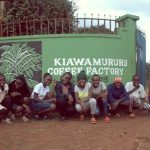


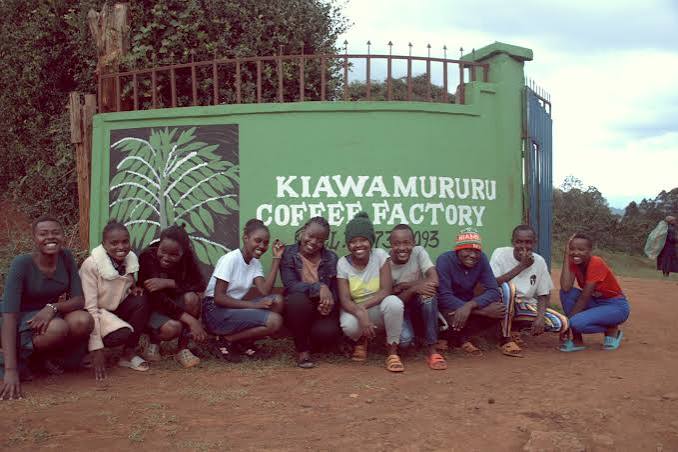
There is an old saying that the best revenge is living well. For the nearly 1,000 members of Kiawamururu Farmers Cooperative Society in Mukurweini, Nyeri County, that wisdom has taken the shape of one of the highest coffee payouts announced this season.
The cooperative has declared payments of KSh 142.30 per kilogramme of cherry and KSh 470.50 per kilogramme for Mbuni, rewarding farmers after another strong marketing season.
Beyond the impressive figures, however, lies a remarkable turnaround story.
Just a few years ago, many questioned whether the cooperative could survive after breaking away from the larger Rumukia Farmers Cooperative Society. Today, those doubts have largely disappeared, replaced by growing confidence that independence may have been the best decision its members ever made.
From Uncertain Beginning to Thriving Coffee Cooperative
The roots of Kiawamururu’s success stretch back to the 2020/2021 coffee season.
That year, nearly 951 farmers chose to leave Rumukia Farmers Cooperative Society and establish an independent cooperative.
The separation was far from smooth.
Like many organizational splits, emotions ran high, opinions were sharply divided and uncertainty surrounded the future of the newly formed cooperative.
Some questioned whether a smaller society could compete against established players in Kenya’s highly competitive coffee sector.
Others feared farmers would lose bargaining power and struggle to market their produce effectively.



Instead, the opposite appears to have happened.
Coffee Payments Reflect Years of Strategic Growth
The latest payment announcement was accompanied by an eye-catching AI-generated poster signed by Secretary Manager Ann Kung’u.
Alongside the payment figures was a simple but heartfelt message:
“We thank God Almighty for this far.”
The statement reflects more than gratitude.
It acknowledges a journey that required patience, disciplined management and strategic decision-making to transform a young cooperative into one of Nyeri’s top-performing coffee societies.
Kiawamururu Performance Has Improved Every Season
The cooperative’s financial records tell a compelling growth story.
While many farmer organizations struggle to increase earnings consistently, Kiawamururu has expanded both production and revenue within a relatively short period.
| Coffee Season | Clean Coffee Sold | Total Revenue |
|---|---|---|
| 2023/2024 | 32,785 kg | USD 153,777 |
| 2024/2025 | 138,832 kg | USD 963,655 |
| 2025/2026 | 80,402 kg | USD 580,248 |
Although revenue moderated during the latest season compared to the exceptional 2024/2025 campaign, the cooperative maintained strong farmer returns while continuing to diversify its marketing channels.
That consistency is increasingly becoming one of Kiawamururu’s greatest strengths.
Direct Coffee Sales Are Changing the Game
One of the biggest shifts in Kiawamururu’s business model has been its growing reliance on direct coffee sales.
For decades, most Kenyan coffee passed through the Nairobi Coffee Exchange before reaching international buyers.
While the auction system remains important, direct sales increasingly allow cooperatives to negotiate better prices with overseas roasters and specialty coffee buyers.
Kiawamururu has embraced this opportunity.
Instead of relying solely on auctions, the cooperative now combines both marketing channels, reducing dependence on a single market while improving overall returns.
Auction Sales Versus Direct Sales
The latest figures demonstrate why this strategy matters.
| Marketing Channel | Clean Coffee Sold | Revenue Earned |
|---|---|---|
| Nairobi Coffee Exchange | 37,798 kg | USD 279,797 |
| Direct Export Sales | 42,604 kg | USD 300,451 |
Although the sales volumes were relatively similar, direct exports generated higher overall earnings.
That difference highlights why more Kenyan cooperatives are exploring relationships with international buyers willing to pay premium prices for traceable, high-quality coffee.
Strong Coffee Quality Continues to Deliver Results
During the 2025/2026 season, Kiawamururu members delivered 494,866 kilogrammes of cherry to the cooperative.
After processing, drying and milling, the crop produced 80,402 kilogrammes of clean coffee.
The conversion rate worked out to approximately 6.2 kilogrammes of cherry for every kilogramme of clean coffee.
Within Kenya’s coffee industry, this is widely regarded as an efficient recovery ratio, reflecting good agronomic practices, careful harvesting and effective processing.
Maintaining quality remains one of the key reasons international buyers continue paying premium prices for coffee from Nyeri County.
Farmers Receive Most of the Income
Perhaps the most impressive aspect of Kiawamururu’s performance is how much of the cooperative’s earnings ultimately reach farmers.
The society generated approximately USD 580,248, equivalent to about KSh 74.8 million, during the season.
Spread across all cherry delivered by members, the gross return equates to roughly KSh 151 per kilogramme.
With the cooperative paying farmers KSh 142.30 per kilogramme, nearly 94 percent of gross income flows directly back to members.
Only a relatively small portion is retained to cover operational expenses, administration and processing costs.
For many cooperative members, that represents strong financial stewardship and reinforces confidence in the organization’s management.
Why Coffee Cooperatives Matter in Kenya
Coffee remains one of Kenya’s most valuable agricultural exports despite fluctuations in global commodity prices.
County economies such as Nyeri, Kirinyaga, Murang’a and Kiambu continue to depend heavily on coffee income to support rural livelihoods.
Well-managed cooperatives perform several critical functions.
They provide farmers with access to processing facilities, organize marketing, negotiate better prices and distribute earnings fairly among members.
When governance is transparent and operational costs remain efficient, farmers benefit directly through higher payouts.
Kiawamururu’s experience demonstrates how effective leadership can significantly improve farmer incomes within a relatively short period.
Leadership Has Played a Central Role
Behind every successful cooperative is effective management.
Chairman Charles Karinga and the cooperative’s leadership team have focused on improving marketing efficiency while expanding access to international buyers.
Rather than depending exclusively on traditional auction sales, the cooperative has positioned itself to capture additional value through direct exports.
That diversification reduces market risk while creating opportunities to negotiate better prices for premium coffee.
Combined with careful financial management, the strategy has strengthened member confidence and positioned Kiawamururu among Nyeri’s standout coffee societies.
Timing Was Worth the Wait
Some farmers may have wished for an earlier payment announcement.
Direct coffee sales often take longer to conclude than auction transactions because negotiations, shipping arrangements and international settlements require additional time.
However, the final figures suggest patience paid off.
The cooperative delivered competitive returns while preserving a high proportion of revenue for its members.
For many farmers, a slightly delayed but stronger payment is preferable to receiving lower earnings earlier.