


- The European Union Deforestation Regulation (EUDR) will come into effect on 30 December 2025 for medium and large-sized coffee companies and on 30 June 2026 for small and micro enterprises.
- EUDR’s implications extend far beyond paperwork; roasters will need to restructure their green coffee sourcing strategies, potentially reassessing long-standing supplier relationships.
- Roasters must ensure every component of their operations – from the coffee beans themselves to their packaging – meets the regulation’s stringent requirements.
- The companies that recognise packaging as both a compliance tool and a marketing opportunity are best positioned to succeed in the new regulatory environment.
The coffee industry stands at a pivotal moment as the European Union Deforestation Regulation (EUDR) approaches implementation. This groundbreaking legislation will fundamentally transform how coffee businesses operate, requiring unprecedented levels of traceability and environmental accountability.
While much of the industry focus has rightly centered on sourcing strategies and farm-level compliance, a critical yet often overlooked aspect is the role of packaging in meeting EUDR requirements.
As roasters navigate the new regulatory landscape, understanding the comprehensive scope of EUDR compliance becomes essential for business continuity and competitive advantage. From supply chain documentation to consumer communication, every aspect of coffee operations must align with the regulation’s environmental objectives.
To learn more about the crucial role coffee packaging will play in meeting EUDR compliance and the key factors that all stakeholders must keep in mind, I spoke to Hanuman Jain at Ecotact.
EUDR is coming: Coffee roasters need to be ready
The EUDR is one of the most significant pieces of environmental legislation to impact the global coffee industry in decades. This landmark regulation aims to prevent products linked to deforestation from entering the EU market, fundamentally reshaping how coffee is grown and sourced.
Initially scheduled for December 2024, the EUDR was delayed by a year following repeated calls to postpone its enactment. The European Commission stated they made the decision to grant global stakeholders, member states, and third countries “a phasing-in period to ensure proper and effective implementation”.
Set to take effect at the end of December 2025 for medium to large businesses and June 2026 for small and micro enterprises, the EUDR will require comprehensive documentation proving that coffee imports are deforestation-free.
This means roasters must implement robust traceability systems, maintain detailed records of their supply chains, and provide verifiable proof of compliance for every shipment. The regulation demands geolocation data for production areas, ensuring complete transparency from farm to final export destination.
The implications extend far beyond paperwork. Roasters will need to restructure their green coffee sourcing strategies, potentially reassessing long-standing supplier relationships and investing in new tracking technologies.
Many businesses are already grappling with the complexity of mapping their supply chains, particularly those sourcing from regions with fragmented farming systems or multiple intermediaries. The costs associated with compliance – from technology investments to additional documentation requirements – represent significant operational challenges that require careful planning and budget allocation.


Adjustments made, but core requirements remain
Recent administrative adjustments have aimed to reduce some compliance burdens, including simplified procedures for certain low-risk products or countries and enhanced guidance documents.
However, the core requirements remain unchanged, and the regulatory timeline continues to advance. Despite ongoing discussions about potential delays and industry calls for extended implementation periods, including from cocoa industry giant Mondelez, European Union officials have maintained their commitment to the extended deadline. Immediate preparation is then essential for businesses seeking to maintain access to the lucrative European coffee market, which accounts for over 30% of global coffee consumption.
“The EUDR will reshape how coffee moves through the global supply chain,” says Hanuman Jain, the CEO of Ecotact, a manufacturer and supplier of green and roasted hermetic coffee packaging solutions. “From December 2025, roasters will need to provide clear proof that their coffee is deforestation-free.”
The financial implications of non-compliance are substantial, with penalties potentially reaching 4% of annual turnover. This regulatory “stick”, combined with the “carrot” of enhanced market access for compliant products, creates powerful incentives for early adoption of EUDR-ready practices across all aspects of coffee operations.
Why packaging is also a focus of EUDR
While much attention centres on green coffee sourcing strategies, the EUDR’s scope extends to packaging materials linked to deforestation.
The regulation’s broad definition of covered products includes packaging materials derived from the seven regulated commodities, creating potential compliance vulnerabilities throughout the supply chain. Traditional packaging solutions, particularly unrecycled paper bags or those including materials from forest sources, could pose compliance risks that roasters can’t afford to overlook.
“While much of the conversation rightly focuses on farm-level traceability, roasters also need to understand how packaging fits into the picture,” says Hanuman. “Roasters who prepare early will not only avoid disruptions but also position themselves ahead of competitors by offering consumers sustainably sourced and packaged coffee.”
This demands a comprehensive approach to EUDR compliance that encompasses both coffee sourcing and packaging decisions. Roasters must ensure every component of their operations – from the coffee beans themselves to their packaging – meets the regulation’s stringent requirements.
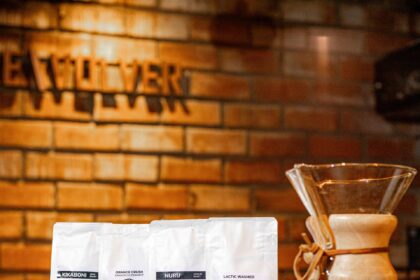
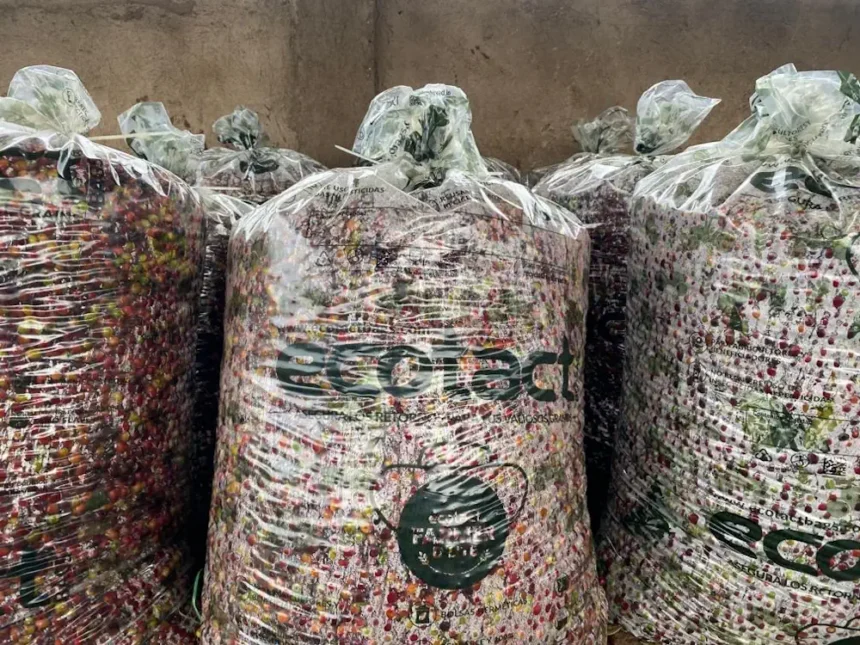
Advanced packaging solutions are emerging as crucial tools in this strict compliance landscape. Modern hermetic packaging, like Ecotact, offers multiple benefits that align with EUDR objectives while addressing practical operational needs.
Innovative, multi-layer packaging can simultaneously meet EUDR requirements and preserve both green and roasted coffee quality during transit. They also help maintain optimal moisture and oxygen barriers, protecting coffee integrity without requiring chemical treatments that could complicate compliance documentation.
“We work closely with farmers, exporters, importers, and roasters to ensure packaging never becomes a weak link in the compliance chain,” Hanuman explains. “Ecotact bags offer high barrier oxygen and moisture properties, keeping coffee as fresh as the day it was harvested, even after a year without pesticides or fumigation.
“This reduces the risk of quality losses or rejections, which can be costly under EUDR.”
Preserving green coffee quality
Quality preservation is particularly important under EUDR; delayed or rejected shipments could create additional compliance challenges and financial losses – and potentially compromise coffee quality. Traditional packaging methods that include materials from supply chains linked to deforestation or rely on chemical treatments for preservation may face scrutiny under the regulations’ environmental standards.
The versatility of modern innovative packaging solutions addresses various supply chain needs, ensuring stakeholders can move coffee efficiently while adhering to compliance standards. Moreover, the packaging solutions must be scalable, in terms of size, to enable roasters to implement EUDR-compliant packaging strategies that match their operational requirements and budget constraints.
“Our nine-layer hermetic packaging solutions start from small 200g holding capacity bags to full 40-foot container liners, for example, helping stakeholders move coffee in a way that is both compliant and sustainable,” Hanuman says. “By safeguarding quality and reducing waste, we ensure packaging supports the integrity of the entire supply chain.”