




The coffee and tea industry is transitioning from traditional plastic packaging to innovative, sustainable solutions that protect both product quality and the planet. Companies are developing breakthrough technologies to meet growing environmental demands. Packaging industry leaders reveal how cutting-edge innovations solve the challenge of preserving delicate flavors while satisfying eco-conscious consumers.
Today’s coffee and tea consumers demand sustainability. According to Future Market Insights (FMI), eco-friendly tea packaging products were valued at around $820 million in 2024 and are projected to reach $1.2 billion by 2034 with a compound annual growth rate (CAGR) of 4%. At the same time, FMI attributes the growth in the coffee bags market (valued at $649 million in 2024 and expected to grow to $1.11 billion by 2035) to “the rising need for convenient and sustainable coffee packaging solutions.” No longer just a trend, sustainable packaging is now an industry imperative.
The Problem With Yesterday’s Packaging
Traditional packaging methods have long failed to address the dual challenges of product preservation and environmental responsibility. Prashant Vachhani, director at Swiss Pac Pvt Ltd, explains: “Traditional packaging methods, such as using locally available plastic bags for filling, offer a basic and low-cost solution for storing products. However, these plastic bags typically lack proper barrier properties, making them permeable to both oxygen and water vapor.”
Hanuman Jain, CEO of Ecotact, takes this critique further: “Traditional packaging for green/roasted coffee and tea has, by and large, ignored the protection from external oxygen and moisture for a longer shelf life of the product in a sustainable way. Most conventional options either don’t preserve the delicate flavors and aromas effectively — especially for specialty coffee and tea — or, if they do, they end up being non-sustainable due to the use of complex materials that are hard to recycle.”
The consequences are clear: accelerated spoilage, microbial growth, and physical and chemical changes that drastically reduce product shelf life and overall quality, all while contributing to environmental degradation.

Brewing Innovation: Latest Technological Breakthroughs
The sustainable packaging landscape is evolving rapidly, with breakthrough technologies addressing both preservation and environmental concerns. Code 4 and Code 5 plastics have long been favored for use in the food and beverage industry for their safety, flexibility, and heat-resistant qualities. However, they were not always accepted by US recycling programs because they were hard to recycle, and it was not cost-effective to do so.
Current research is focused on transforming the recycling process in an attempt to minimize the environmental impact of these plastics. It includes improving sorting and cleaning techniques, as well as exploring alternative recycling methods, such as chemical recycling. Packaging companies are going all out in their research and development efforts to produce Code 4 and Code 5 recyclable pouches, supporting a circular economy approach.
“To preserve the freshness of roasted coffee, we also incorporate one-way degassing valves in our pouches,” notes Vachhani. “These valves allow gases to escape without letting oxygen in, preventing pouch damage and extending shelf life, ensuring both product protection and sustainability.”



Pushing innovation even further, Ecotact has “developed 9-layer hermetic packaging technology with close-to-zero oxygen and moisture transmission rates, which significantly extends shelf life for more than 365 days while remaining 100% recyclable and reusable,” explains Jain. Ecotact’s Ship Shield Container Liners even won the Best Sustainable Product Award at the 2022 World Specialty Coffee Conference in Japan (SCAJ).
Flexible coffee and tea packaging is expected to lead the market in the coming years, driven by convenience, lower costs, and the use of innovative materials, such as compostable films and recyclable plastics.
Consumer Trends Reshaping the Market
Today’s consumers are more informed and environmentally conscious than ever before. A study conducted by Credence Research states that North America held 35% of the eco-friendly tea packaging market share in 2024, driven by strong demand for eco-conscious products. At the same time, Europe’s sustainability initiatives and consumer desire for green products drove market share growth to 30%.
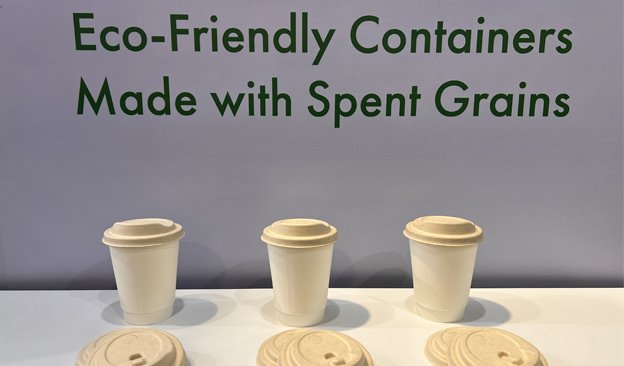
“Consumers are more informed today. They are looking for packaging that reflects their values — minimalistic design, recyclability, and reusability are high on the list,” observes Jain. Popular trends include custom-branded standee pouches, hermetic bags with valves for roasted coffee beans, and compostable coffee sampling trays.
“There has been a clear shift in consumer preferences toward sustainable and environmentally responsible packaging materials,” adds Vachhani. “Customers are increasingly demanding that brands move away from single-use plastics and adopt eco-friendly alternatives, such as pouches that are biodegradable or compostable, paper-based, and recyclable or reusable.”
Strategic Considerations for Brands
When selecting sustainable packaging, brands must balance multiple factors. “Start by asking: What happens to this package after use?” advises Jain. “Brands need to evaluate packaging based on end-of-life recyclability, carbon footprint, and protection capabilities.”
Vachhani emphasizes the importance of quality and appearance: “Consumers are becoming increasingly conscious of both sustainability and product presentation. Packaging must not only be eco-friendly but also maintain functionality, durability, and visual appeal to stand out in a competitive market.”
Key considerations include:
- End-of-life recyclability and disposal infrastructure
- Carbon footprint throughout the supply chain
- Protection capabilities for product integrity
- Temperature resistance for cold brew and ready-to-drink products
- Material transparency and supply chain traceability
- Cost-effectiveness and scalability